INTRODUCTION TO METAVERSE
Content
History of web- Origin and evolution and Internet- web generations- web 1.0- Web 2.0- Web 3.0 - Metaverse - origins -
Published on Linkedin Articles
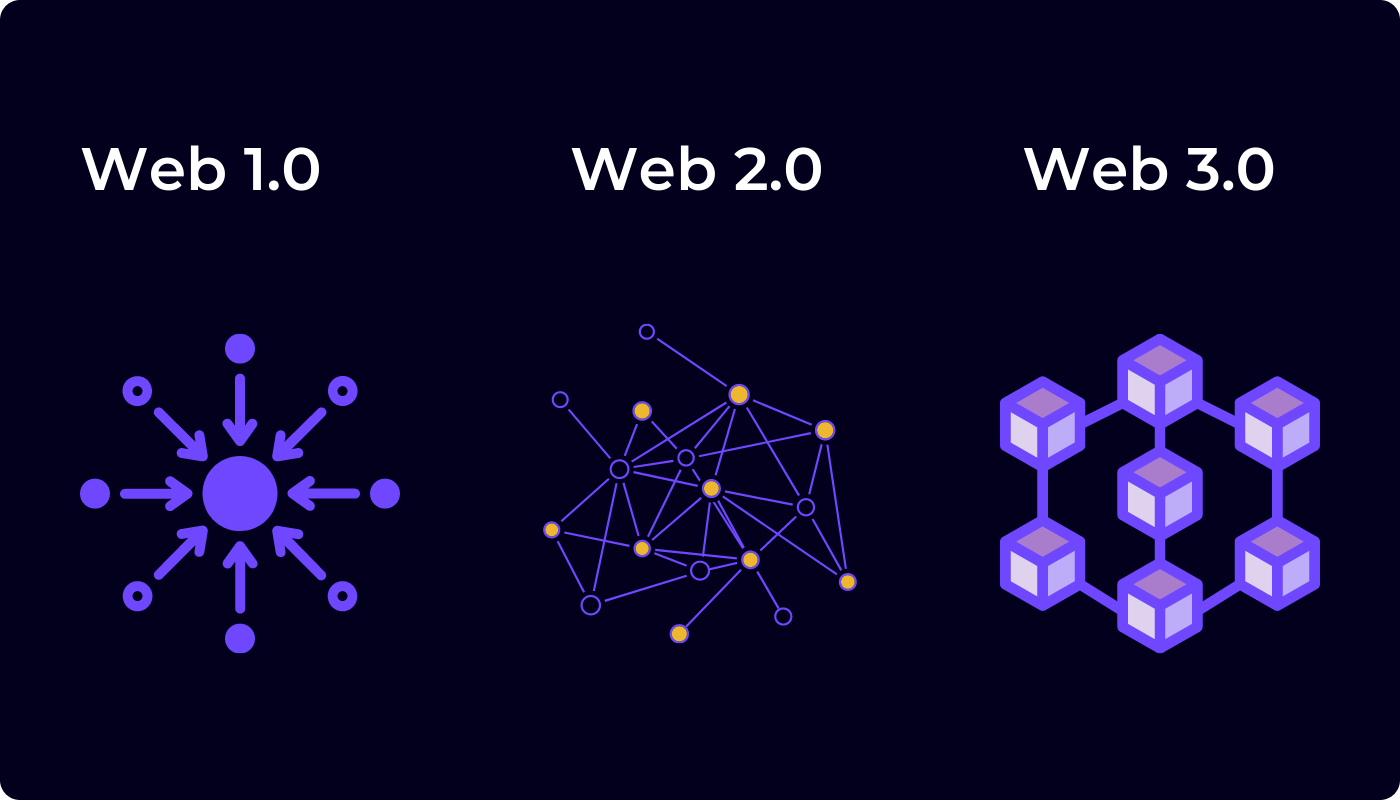
Image Source: World Economic Forum
Metaverse is the next version of the Internet. Hence, in this Chapter, we will learn about the origin and evolution of the internet or web. Let us start with the origin of the web. The concept of the web originated in CERN. It is derived from a French acronym that translates into European council for Nuclear Research. It was a provisional body founded in 1952 to establish a world class fundamental physics research organisation in Europe. There are a set of tools like internet, SGML and hypertext. The Internet is nothing but the infrastructure required early on by the web. SGML is the basis for document markup on the web and hypertext is the underlying linking structure for the web.
Tim Berner Lee
Tim Berner Lee was working at Switzerland’s European Organisation for Nuclear research as an independent contractor. In 1989, Tim Berner Lee created the world wide web. He is director of WWW consortium. This web standards organisation was created in 1994 and it creates interoperable technologies, specifications, guidelines, software and tools to help achieve its full potential. He is on the board of directors of WWW foundation- founded in 2009 to coordinate efforts to maximise the web’s potential for human benefit.
World Wide Web
World wide web is also known as the Web is an information system that uses Uniform Resource Locators ( URL) to identify documents and other web resources which then can be connected via hyperlinks and accessed through the Internet
WWW Consortium
It is an organisation whose members develop the specifications used on the web. The world wide web or web is a network of interconnected hypertext documents accessed over the internet. A web browser is used to view online sites that may contain text, photos, videos and other multimedia and move between them using hyperlinks. Tim Berner Lee proposed creating the world wide web on March 12th, 1989. The 1989 proposal was intended for a more efficient CERN communication system but Berner soon realised that notion could be used globlally. In 1990, Berner Lee and Belgian computer scientist Robert Cailliau proposed using hypertext to link and access information of various types as a web of nodes in which the user can browse. In this manner, the first web service was created and tested. Later it was confined to the World Wide web.
Versions of the Web
There are three versions of Web namely Web 1.0, Web 2.0 and Web 3.0
Web 1.0
Web 1.0 is the readable phrase of the web with flat data. In web 1.0 there is only limited interaction between sites and users. Web 1.0 is simply an information portal where users passively received information without being allowed to post reviews, comments and feedback. Web 1.0 comprises static web pages. These were nothing but brochureware.
Web 2.0
Web 2.0 is a writable phrase of the world wide web with interactive data. Unlike web 1.0 , web 2.0 facilitates interaction between web uses and sites- allowing users to interact more freely with each other. It encourages participation, collaboration and information sharing. Examples of web 2.0 applications are Youtube, Wiki, Flicker, Facebook etc. Web 2.0 has features like keyword search and tagging. Web 2.0 user experience is excellent.
Web 3.0
Web 3.0 is the executable phrase of the world wide web with dynamic applications , interactive services and machine to machine interactions. Web 3.0 is a semantic web that refers to the future. In web 3.0 computers can interpret information like humans and intelligently generate and distribute useful content tailored to the needs of the users. One example of web 3.0 is Tivo - a digital video recorder. Its recording program can search the web and read what it finds to you based on user preference.
Web3 is a collection of design patterns and methods in which Web-based applications use peer-to-peer or blockchain-based platforms for storing data rather than centralised servers and walled-garden platforms. A Web3 wallet is a browser plug-in that allows you to access cryptocurrencies and interact with smart contracts on web pages.
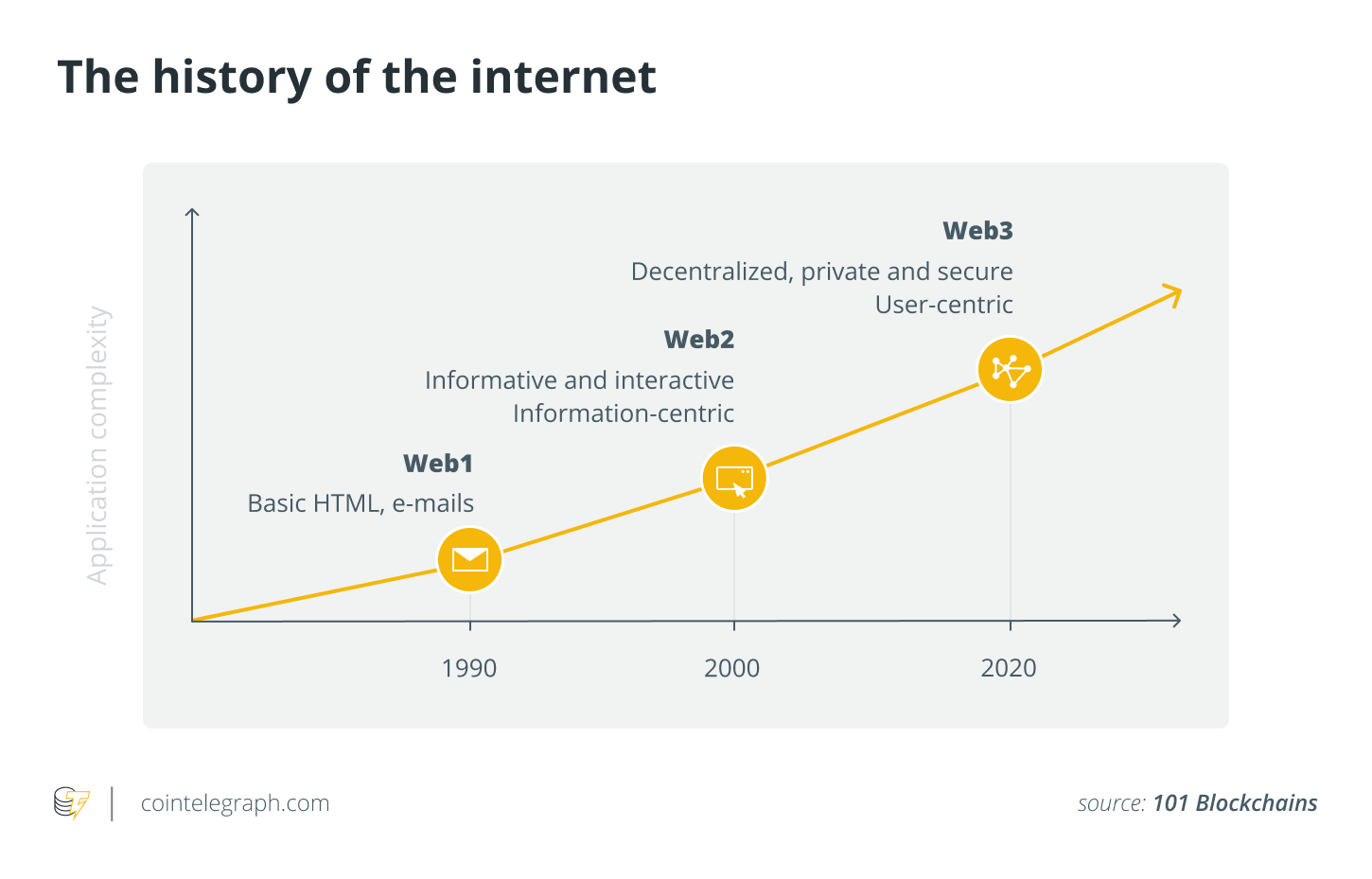
Image Source: Cointelegraph
Web 1.0 is the initial web implementation and lasted from 1989 to 2005. It is defined as a network information connection. Tim Berner Lee, the inventor of the world wide web considers the web to be read only. It offers little interactivity in which consumers may exchange information with one another. But it is not possible to communicate with the web site. The web’s role was primarily passive in nature. Web 1.0 is the first version of the world wide web and it is roughly described as “ it is an information space in which the items of interest referred to as resources are identified by global identifiers called Uniform Resource identifiers ( URI). The first generation of the internet was characterised by static web sites used solely for content delivery. In other worlds, the early web enabled us to search for and read information. There was hardly any user participation or content contribution. In web 1.0 technique, some organisations create apps that allow users to get content from the web but they don't see the application function. HTML, HTTP and URIs are the technologies used in web 1.0. Other protocols used in web 1.0 include XML, XHTML and CSS, ASP, PHP, JSP, CGI, Pearl are examples of mixed server and client technologies. Javascript, VB script and Flash are used on the server side on the client side. Web 1.0 is extremely sluggish and users must refresh the site every time new information is posted to the web pages. The web 1.0 issue is that it only works in one direction. In other words, user is not permitted to submit or alter the web page
Web 1.0 Characteristics
Now let us look at characteristics of web 1.0. HTML, HTTP and URI are among the essential web protocols included in web1.0. The following are the primary characteristics of web 1.0. They have read only content. Create a web presence and make their information accessible at all times to anyone. It uses basic hypertext markup language and provides static web pages
Limitations of web 1.0
The content on web 1.0 pages was only readable by humans and was not machine compatible. The webmaster was entirely responsible for keeping users up to data and managing the web site’s content. There was no online console available to execute dynamic events due to lack of dynamic representation to collect only static information.
Web 2.0
Web 2.0 is the second generation of the web Dale Dougherty characterised it as a “read-write web” in 2004. The idea was born during a brainstorming session at a conference between O'Reilly and Media Live International. Web 2.0 technologies enable the gathering and management of enormous worldwide populations with shared interests in social interactions. Tim O'reilly defines web 2.0 as follows. Web 2.0 is the business revolution in the computer industry caused by the move to the internet as a platform and any attempt to understand the rules for success on the new platform. Chief among those rules is this: build applications that harness network effects to get better and more people use them. Web 2.0 enables qualities such as participatory, collaborative and dispersed practices Allowing formal and informal spheres of daily activities to take place on the web. In other words, it resembles important distinguishing features of web 2.0 such as relationship technologies, interactive media and a social digital technology known as wisdom web, people centric and participatory web which facilitates reading and writing on the web, making web transactions bi-directional. Web 2.0 is a web as a platform user abandons many of the controls they have used in web 2.0. In other words web 2.0 users have more involvement and less control. Web 2.0 is not only a new version of web 1.0 but also implies flexible web design, creative reuse, updates, collaborative content creation and mediation in web 2.0 which should be considered as one of the outstanding features of the web 2.0 is support to collaboration and help gather collective intelligence.
Web 2.0 characteristics
Web 2.0 is a term developed by Tim O'reilly and colleagues to describe the transition of the world wide web to a new era of use and service creation. The classification can be used to expand the understanding of web 2.0 gained from various definitions.
Technology centric definition. The web has developed into a platform with software that extends beyond the capabilities of Single device. Technology connected with blogs, wikis, podcasts, RSS feeds and so on
Business centric Definition: A method for designing software and enterprises. The business revolution in the computer industry brought about by the shift to the internet as a new platform.
User-centric Definition
The term social web is frequently used to describe community based websites. It's all about content management and innovative ways for people to communicate and interact with one another. Web applications that aid in the generation of communal knowledge, social networking and flow of information between users.
Web 2.0 Limitations
The first point is that changes and updates are iterated regularly. The second point is ethical considerations in the development and use of web 2.0. The third is there is still lack of interconnectivity and knowledge exchange among platforms beyond community borders
Web 3.0
This new iteration of the web aims to put more control over the web content in the hands of its users. It is built on the pillars of blockchain technology. Aiming to eliminate big intermediaries and centralised agencies controlling the web. The main intention of fully resuming power is still a dream but the focus is day by day changing. For its adoption to create a more decentralised and democratic version of the internet. These changes bank upon the smart contract capabilities of the blockchain and incorporate decentralised applications into the ecosystem replacing the centralised versions.
Web 3.0 and Metaverse
The expansion of Metaverse is tied to the development of web 3.0 which many in the industry believe to be the next chapter of the Internet's existence. Also known as the decentralised web, web 3.0 focusses on connecting data in a decentralised way rather than its stored centrally. It is being combined with virtual reality to create an immersive version of the internet. Aiming to create a seamless universe. This enables users to live in a virtual world the way we live in our physical lives. Web 3.0 is what makes the metaverse a reality.
Terminology
Web 1.0 URI CGI
Web 2.0 HTML Pearl
Web 3.0 HTTP JavaScript
Read Web XML VBScript
Read Write Web XHTML Server Side
Execution Web PHP Client Side
References:
WEB 3.0 VS METAVERSE: SIMILARITIES AND DIFFERENCES YOU NEED TO KNOW IN 2022
Linkedin Article Link


